Comprehensive training in pre-clinical, para-clinical, and clinical sciences in accordance with the National Commission for Indian System of Medicine (NCISM).
Departments Directory
Ayurveda Samhita & Siddhanta
Department of Ayurveda Samhita, Siddhanta and Sanskrit:
Samhita, Siddhanta and Sanskrit department aims at imparting the knowledge of Samhita (classical texts) such as Charaka Samhita, Ashtanga Hridaya etc.
Samhita, Siddhanta and Sanskrit department emerges as the root through which the other branches of science evolve. As the Samhitas are written in Sanskrit, in order to understand and comprehend the meanings of the Shlokas in Samhita, this department is involved in teaching Sanskrit to propagate authoritative knowledge about Samhita.
Mission:
To emerge as a beacon of excellence in imparting the knowledge of Samhita.
To explore the Samhitas in a systematic and scientific manner.
To implement the basic principles and the knowledge of Samhita in clinical practice.
To encourage and entitle the students to learn, understand, practice and propagate Ayurveda.
Vision:
To conduct innovative research on the basis of the core principles of Ayurveda delineated in Samhita.
Faculty in the Department of Samhita, Siddhanta and Sanskrit
1. Faculty Details:
Dr Alok Roy
Designation: HOD and Professor
Years of Experience : 20 years
NCISM teachers ID: AYSS00520
RGUHS Teachers ID : A0156
SAMC&H Employee :SAMCH & H T/006
Mr Sanjeeva Krishna Hegade
Designation : Professor
Years of Experience : 15 years
NCISM teachers ID : AYSN00082
RGUHS Teachers ID : AYSN0194
SAMC&H Employee ID : SAMCH&T/015
Dr Divya Nagari N
Designation : Associate Professor
Years of Experience : 9 years
NCISM teachers ID: AYSS00266
RGUHS Teachers ID: A0159
SAMC&H Employee ID : SAMC&H/T/032
Dr.SahanaC
Designation: Professor
Years of Experience: 11 Years
NCISM teachers ID: AYSS00267
RGUHS Teachers ID: yet to receive
SAMC&H Employee ID : SAMC&H/T/030
Dr Suganya Devi
Designation: Assistant Professor
Years of Experience: 2 months
NCISM teachers ID: AYSS02049
RGUHS Teachers ID: yet to receive
SAMC&H Employee ID : SAMC&H/T/088
2. Department Initiatives:
Samhita, Siddhanta and Sanskrit department helps the students to learn and grow by hosting a number of Webinars and Seminars. The department seeks to increase students’ knowledge and provide them with the skills necessary to succeed as both academicians and physicians. We focus on imparting the essence of the subject by introducing and familiarizing them with Ayurvedic literature. Initiatives have been taken to successfully conduct competitions like Quiz, Poetry, Shloka recitation, Skit competition etc. Events like Charaka jayanti, Guru purnima are celebrated in order to provide the pupils with a better understanding of the historical background of Ayurveda.
3. Department Activities:
Expert lectures are organised in the department.
Paper presentations are done by faculties at National and International level Seminars.
CME programmes are attended by faculties.
Guest lectures:
1. Guest lecture- Delivered by Dr Alok Roy to PG scholars in Sr Sri Ayurvedic Medical Science and Research in Aug 2023
2. Guest lecture – Delivered by Dr Alok Roy in AROHA 2024, an international conference in AIIA on the topic “Opportunities of Integration in Healthcareâ€, New Delhi in Oct 2024
3. Guest lecture- Delivered by Dr Divya Nagari on the topic “A Critical Review on Varna in Brihatrayi†and interactive session for PG scholars in Sri Sri College of Ayurvedic Science and Research in Aug 2021
5. Guest lecture- Delivered by Dr Divya Nagari on the topics “Trisutra of Ayurveda†and “A holistic approach to Health†for UG scholars in Sri Sri College of Ayurvedic Science and Research in May 2022 and Sept 2024
UG Research Project:
Research Project on Assessment of the etiology in relation to non compliance of Ritumati charya in patients with PCOS- Guided by Dr Alok Roy
...
4.Research and Publications from the Department:
Publications of Dr Alok Roy:
RaktaMokshana In Kaya Chiktsa A Perspective View of Sushruta – Indian Journal of Ancient Medicine and Yoga – IJAMY_8321_2018 – Nov 24, 2018
Dr. Alok Roy has also guided a student in RGUHS project.
Publications of Dr Divya Nagari N:
Standardization of Varnya dravya wsr to Yashtimadhu and Manjishtha Churna – An Analytical study –Ayushdhara –April 2020
A clinical study of Draksha Ghrita in the management of Anaemia in pregnancy- Ayushdhara- April 2020
Ayurvedic Medicated eye drops (Bilvaditailaaschyotana)- A review- IJAAR- Aug 2020
Publications of Dr Renuka:
Polycystic ovary syndrome – A case Report – RGUHS – Journal of Ayush Sciences, RJAS 2021
Best Practices of the Department.
Case presentations and discussions
Practical demonstration of various therapeutic procedures
Clinical utility of Basic principles
Shloka pathana
Comprehending the Shlokas through Vyakhyana(commentary)
Rachana Shareera (Anatomy)
Introduction to Department:
“Without anatomy, no science is accomplishedâ€
The Department of Rachana Shareera focuses on the detailed study of human anatomy, as described in classical Ayurvedic texts, integrated with modern anatomical knowledge. It aims to provide a comprehensive understanding of the structural organisation of the human body to lay the foundation for clinical practices and research. Practical training through dissection and the exploration of ancient concepts equip students with insights that bridge traditional wisdom and contemporary science.
Mission:
The Department of Rachana Shareera is committed to imparting a comprehensive and systematic understanding of human anatomy, rooted in the foundational principles of Ayurveda and enriched by contemporary scientific advancements. The department strives to integrate traditional and modern perspectives, fostering a holistic and interdisciplinary approach to the study of the human body.
Through rigorous academic training, practical exposure to dissection, and innovative teaching methodologies, the department aims to cultivate analytical thinking and novel capabilities among students. By emphasizing the confluence of classical knowledge and modern science, the department seeks to advance the frontiers of anatomical education. It strives to strengthen clinical practice and promote research, thereby contributing to the development of competent professionals in healthcare and Ayurveda.
Vision:
The Department of Rachana Shareera at Sushrutha Ayurvedic Medical College & Hospital, Bengaluru is committed to fostering a deep understanding of the intricate structure and functions of the human body as described in classical Ayurvedic and contemporary texts. We aim to preserve, innovate, and integrate ancient wisdom with modern scientific approaches to promote holistic well-being. Through excellence in education, research, and clinical practice, our department aspires to develop future practitioners who are skilled in diagnosing, treating, and maintaining the health of individuals by addressing both physical and mental harmony in alignment with Ayurvedic principles.
Faculty in the Department of Rachana Shareera:
1. Faculty Details:
Dr. REMITHA KK
Designation : Professor & HoD
Years of Experience : 13years
NCISM teachers ID : AYRS00194
RGUHS Teachers ID : A0161
SAMC&H Employee ID : SAMCH/T/037
Dr.AmbethkarS
Designation : Associate Professor
Years of Experience : 7 Years 1 Month
NCISM teachers ID:AYRS00828
RGUHS Teachers ID:Not available
SAMC&H Employee ID:SAMC&H/T/095
Dr.Sonya ManikDahat
Designation : Assistant Professor
Years of Experience : 3 Years
NCISM teachers ID:AYRS01316
RGUHS Teachers ID: Not Available
SAMC&H Employee ID:SAMC&H/T/098
2. Department Initiatives:
The Department of Rachana Shareera actively engages students in various learning initiatives that complement their academic growth and practical knowledge. These initiatives include:
Visit to the Manipal Museum of Anatomy, Udupi: Students explore the Manipal Museum of Anatomy to gain a deeper understanding of human anatomy through exhibits and anatomical models.
Visit to NIMHANS Brain Museum, Bengaluru: An educational visit to the NIMHANS Brain Museum offers students valuable insights into neuroanatomy and brain disorders.
Marma Identification: Students are trained in the identification and understanding of Marma points, enhancing their knowledge of traditional anatomical landmarks.
Mounting Wet Specimens: Students actively participate in the process of mounting wet specimens, an essential skill in anatomical study.
Preparation of Dry Bone Models: Students are involved in the preparation of dry bone models, aiding in the study of skeletal structures.
Creating Teaching Models: The department fosters creativity by guiding students in the preparation of teaching models that serve as educational tools for better understanding of compSeminar presentations by students: To strengthen the concepts, enhance the vocabulary and to develop confidence among them.lex anatomical concepts.
3. Department Activities:
The Department of Rachana Shareera employs a diverse range of innovative teaching and learning methodologies to enhance student engagement and learning outcomes. Key activities include:
Hands-on Learning through Dissection and Organ Study: Students engage in practical dissection and study of organs to understand human anatomy in depth.
Guest Lectures: Regular guest lectures by experts in the field provide students with valuable insights and exposure to advanced concepts.
Integrated Teaching Sessions: Interdisciplinary teaching sessions foster a holistic understanding by connecting various aspects of medical education.
Early Clinical Exposure: Students gain practical experience through early exposure to clinical settings, bridging the gap between theoretical learning and real-world practice.
Interactive Group Activities: Group discussions, quizzes, seminar presentations, and skits encourage collaborative learning and critical thinking.
Curriculum-Oriented Projects: Students undertake projects aligned with the curriculum, promoting research, innovation, and in-depth learning.
These activities aim to build a strong foundation in Rachana Shareera and equip students with both theoretical knowledge and practical skills.
...
4. Research and Publications from the Department:
“High origin of Radial artery from Axillary arteryâ€, Remitha K. K.,Pralhad D. S., RGUHS Journal of AYUSH Sciences; October 2011 Volume 1 Issue2.
“Embryological development of bladder, urethra, uterus & uterine tubes, prostate, and external genitaliaâ€, Remitha K. K., JNANA Srotas; 2012 Volume 7/8, Issue – 1-2/3-4.
“Concept of Neutraceuticals and Functional Foods in Ayurvedaâ€, Priyadarshini S. , Remitha K. K., Journal of Karnataka Sanskrit University, June 2014, Special issue – Indian Food tradition.
“Ayurvedic management of Dacryocystitis to prevent surgical interventionâ€, Priyadarshini S, Remitha KK; World Journal of Pharmaceutical Research; February 2017 Volume 6, Issue- 3.
“Evidence based holistic solutions from Yoga & Ayurveda to combat viral infectionsâ€, Priyadarshini S, Remitha KK, Roja LD; Global Journal for Research Analysis; April 2020 Volume 09, Issue- 4.
“Preventive measures for Pandemics W.S.R to Covid-19 – An Ayurvedic Approachâ€, Ramakrishna BR, Remitha KK, Sunitha MP; Yoga Sudha, April 2020, Volume 36, No.4.
“Ayurvedic management of co‑infection of Herpes zoster ophthalmicus in COVID‑19 patient: A case reportâ€, KK Remitha & S, priyanka & Priyadarshini, Shantala. (2021). JAyurvedaCaseRep 2021 4 2 44 323905. 10.4103/jacr.jacr_51_21.
5. Best Practices of Department:
Balanced & Collaborative Learning: A balanced approach combining modern anatomical knowledge with traditional Ayurvedic principles for a holistic understanding of the human body.
Regular hands-on training with Cadaveric Dissection and Clinical Correlation: To enhance practical learning and understanding of anatomical structures from an Ayurvedic perspective.
Interactive and Engaging Teaching Methods: Utilization of digital tools, 3D software, and practical sessions to create an engaging and interactive learning experience for students.
Clinical Integration: Emphasis on Marma points, Understanding Radiological Findings, and the practical application of anatomical knowledge in clinical settings.
Student Support and Guidance: Continuous mentoring, personalized academic guidance, and feedback mechanisms to ensure student growth and success.
Shareera Kriya (Physiology)
Department of Kriya Sharira
Kriya Sharira (Ayurveda Physiology) is a fundamental subject in the study of medical sciences. It deals with the study of the human body concerning its physiological norms i.e. the functioning of the human body in its normal state.
The department deals with the basic concepts, knowledge and applicability of Tridosha Sapta Dhatus , Malas , Prakirti , Mana , Nidra , Oja etc .The etiopathogenesis of a disease cannot be fully understood without a subjective and objective assessment of Dosha, Dhatu, and Mala. Thus, this subject forms the foundation for a proper understanding of Ayurveda and is crucial for medical students to comprehend other preclinical and clinical subjects effectively.
Mission:
To impart theoretical knowledge explaining the physiology of each system through charts, models, skill labs, PPT’s and different practical activities including group discussion to get perfection of each system.
To integrate disciplines to understand the functions of individual systems within a whole organism and the mechanisms that produce and sustain life.
To Integrate the knowledge with contemporary human physiology for a deeper understanding of the body’s functions.
Additionally, the objective is to inspire the students in acquiring and enriching knowledge, skills and to encourage them to embrace human values in their career and life.
Vision:
The department of Kriya Sharira aims at providing deep insights into the study of human body and human life. The department aspires to cultivate skilled professionals who can bridge ancient wisdom with contemporary healthcare, promoting holistic well-being and contributing to the global recognition of Ayurveda. Through innovation, research, and education, the Kriya Sharira Department aims to uphold and enhance the significance of physiological principles in sustaining health and preventing disease, aligned with human values and sustainable practices. The department also aims at imparting quality education to the seekers of Ayurveda in order to produce good physicians and researchers.
1. Faculty in the Department of Kriya Sharira :
Dr.Chandrakala S
Designation : Professor and HOD
Years of Experience : 18yrs
NCISM teachers ID : AYKC01884
RGUHS Teachers ID : A1674
SAMC&H Employee ID : SAMC& H/T/81
Dr. Nimisha B Raj
Designation : Professor
Years of Experience :10yrs 1month
NCISM teachers ID : AYKS00127
RGUHS Teachers ID : A0160
SAMC&H Employee ID : SAMCH022
Dr.Bindusree v
Designation : Assistant professor
Years of Experience : 6 months
NCISM teachers ID : AYKS01300
RGUHS Teachers ID : A1674
SAMC&H Employee ID : SAMC& H/T/082
2. Department Initiatives :
The Department of Kriya Sharira actively involves students in diverse learning activities designed to enhance both their academic development and practical skills. These activities include:
Developing Teaching Models: The department encourages creativity by mentoring students in creating teaching models, which serve as effective educational tools for simplifying and understanding complex physiological concepts.
Student Seminar Presentations: These sessions aim to reinforce conceptual understanding, improve vocabulary, and build students’ confidence.
3. Department Activities:
The Department of Kriya Sharira utilizes a variety of innovative teaching and learning methods to promote student engagement and improve learning outcomes. Notable activities include:
Practical sessions - Students acquire practical experience through hematological and urological experiments.
Students are trained in Nadi Pariksha Prakriti Pariksha, Sara Pariksha, Koshta Pariksha and Agni Pariksha, which are the key concepts in Ayurveda related to the comprehensive evaluation of a patient.
Interactive Group Activities: Activities such as group discussions, quizzes, Model based learning, sloka recitation, Seminar presentations and role plays foster collaborative learning and encourage critical thinking.
Curriculum-Based Projects: Students engage in projects tailored to the curriculum, promoting research, innovation, and comprehensive learning.
These activities are designed to establish a solid foundation in Kriya Sharira and provide students with a blend of theoretical knowledge and practical skills.
...
4. Research and Publications from the Department:
5. Best Practices of Department:
Collaborative Learning: An integrated approach that blends modern physiological knowledge with traditional Ayurvedic principles, offering a comprehensive understanding of the human body.
Student Support and Guidance: Ongoing mentorship, tailored academic advice, and feedback systems to foster student development and achievement.
Dravyaguna Vijnana
Introduction to Department:
The Dravyaguna department in an Ayurveda college focuses on the study and application of mainly medicinal plants and other edibles (Dravya) and their pharmacological properties (Guna), with the goal of advancing knowledge and practice in Ayurvedic medicine.
Mission:
The mission of the Dravyaguna department is to educate and train students in the scientific understanding of medicinal plants and their therapeutic uses in the context of Ayurvedic healing. It aims to:
Enhance Knowledge: Provide in-depth education on the properties, actions, and therapeutic potential of various Ayurvedic herbs, minerals, and substances.
Integrate Traditional and Modern Science: Bridge the gap between traditional Ayurvedic practices and modern pharmacological research, promoting evidence-based use of medicinal plants.
Promote Holistic Health: Equip students with the tools to use Dravyaguna in a way that fosters holistic, individualized treatment protocols in alignment with Ayurvedic principles.
Research and Development: Conduct and encourage research in the identification, standardization, and clinical applications of Ayurvedic medicines.
Sustainability and Conservation: Promote sustainable use and cultivation of medicinal plants and to encourage students to conserve the indigenous species and cultivate medicinal plants for their clinical usage and– emphasizing ecological balance and conservation of endangered plant species.
Vision:
The vision of the Dravyaguna department is to be a leader in the study and application of medicinal plants and substances in Ayurveda, shaping future practitioners who integrate ancient wisdom with modern scientific advancements. The department envisions:
Global Recognition: Establishing the department as a centre of excellence in Ayurvedic drug knowledge and therapeutic application, both nationally and internationally.
Innovation in Healing: Pioneering research on the medicinal potential of plants and natural substances to develop novel therapeutic solutions that can address contemporary health challenges.
Sustainable Practices: Ensuring the preservation and sustainable use of medicinal plants to safeguard global biodiversity and protect traditional healing practices.
Holistic Healthcare: Advancing Ayurveda as a comprehensive, preventative, and restorative system of medicine that can contribute to global health and wellness.
Faculty in the Department of PG & UG Studies in Dravyaguna
Dr B Ravikiran
Designation : Professor & HOD
Years of Experience : 20 years
NCISM teachers ID : AYDG00305
RGUHS Teachers ID : A0734
SAMC&H Employee ID : SAMC&H/T/008
Dr Sunitha M P
Designation : Professor
Years of Experience : 12 years, 11 months
NCISM teachers ID : AYDG00592
RGUHS Teachers ID : A0167
SAMC&H Employee ID : SAMC&H/T/014
Dr Niveditha Shetty
Designation : Associate Professor
Years of Experience : 9 years
NCISM teachers ID : AYDG00247
RGUHS Teachers ID : A0679
SAMC&H Employee ID : SAMC&H/T/073
Dr Nischal P
Designation : Associate professor
Years of Experience : 4 years 11 months
NCISM teachers ID : AYDG01385
RGUHS Teachers ID : -
SAMC&H Employee ID : SAMC&H/T/054
Dr Akshatha Somayaji K
Designation : Assistant Professor
Years of Experience : 4 months
NCISM teachers ID : AYDG01993
RGUHS Teachers ID : -
SAMC&H Employee ID : SAMC&H/T/086
Department Initiatives (Visits):
The department initiates educational visits to Various Herbal gardens within and outside the state and also to various QA and QC laboratories as per NCISM guidelines. The department collaborates with research institutes for conduction of Experimental studies for the post graduates. For Undergraduates, every term, the students are taken for an educational trip to Herbal gardens and Established QA and QC laboratories making it compulsory 3 visits per Professional year. For Post graduates, periodic visits to Herbal gardens, natural habitats of medicinal plants and laboratories and raw drug repositories and Herbarium libraries etc are undertaken.
Department Activities:
Organised:
Conduction of CME for Ayurveda Teaching faculty of Dravyaguna sponsored by RAV, New Delhi, Ministry of AYUSH – 2022
Conduction of World environment day – Every year
Raw drug Authentication for In-House Pharmacy. – Need based
Drug Authentication and Analytical studies for various research projects of the institute. – Need based
Workshop on AYUSHSURAKSHA – Pharmacovigilance ADR Reporting jointly organised with CARI, Bengaluru – 2024
WORKSHOPS Participated:
Attended Workshop on Scientific writing, research intehrity and publication ethics organised by NCISM, New Delhi, Hosted by SSCASR – 2024 – Dr B Ravikiran
Attended Workshop on Scientific writing, research intehrity and publication ethics organised by NCISM, New Delhi, Hosted by Bharatiya Sanskrit Prabodhini – 2024 – Dr Sunitha M P
Attended 6 day CME for AYUSH Dravyaguna Teachers, Sponsored by Ministry of AYUSH, New Delhi and Co-ordinated by RAV, New Delhi at NIA, Jaipur – Dr Sunitha M P
GAMCB – National level webinar “Charakamruta†organized by the Dept. of Samhitasiddanta, PG and PhD Dept. Of Dravyaguna on 12/08/2021 and 13/08/2021 on the occasion of Charakajayanti. – Dr Nischal P
Seth Govindji Raoji Ayurved College & Hospital, Solapur – National webinar series on “Charakbodha- Shastra to Vyavahar†held between 09th Aug 2021 to 12th Aug 2021 organised by Samhita Dept “Seth Govindji Raoji Ayurved College & Hospital, Solapur†– Dr Nischal P
National webinar on significance of Charaka Samhita over other Samhithas 20th september 2021, organised by Shikshakprakosht of Vishwa Ayurveda Parishad – Dr Nischal P
National webinar on Dravyaguna Vijnana organised by Department of Dravyaguna Vijnana, Ayurveda Seva Sangh’s , Ayurveda Mahavidyalaya, Ganeshwadi, Panchavati, Nashik, 24th August 2021 – Dr Nischal P
Foundation Course in Educational Methodology (FCEM), organised by RGUHS Academic and Administrative Training Institute on May – June 2022 – Dr Nischal P
Delegate in RGUHS Research writing workshop – Online – 2021 – Dr Nischal P
Delegate in National webinar on Charakamrutha organised by GAMCB – 2021 – Dr Nischal P
Delegate & Organizing committee in CME for AYUSH teachers in Dravyaguna. 2021 – Dr Nischal P
Delegate in CARI Workshop on Research proposal writing for grants – 2022 – Dr Nischal P
Delegate in CARI workshop on Pharmacovigilance. – 2024 – Dr Nischal P
Research activities and Publications from the Department:
Faculty projects:
RGUHS Funded staff research project as PI Dr Sunitha M P titled, ‘Comparative, analytical study of Apakwa, Pakwa asamskarita and Pakwa samskaritaMadanaphala – Randia dumatorum Lam.
RGUHS Funded Staff research Project as PI Dr Nischal P titled, ‘Method-development of Assessment andQuantification of Veerya with special reference to Dwividhaveerya and Surface Temperature- A comparative analytic-observational pilot study.
Dr.Niveditha Shetty Co – Investigator for a project titled “ An experimental study to evaluate the effect of Apamarga Phala (Achyranthes aspera Linn) in Bhasmaka Roga w.s.r. to Hyperthyroidism
Student Projects:
RGUHS Funded Student research Project by Ms Latha guided by Dr Sunitha titled, ‘In-vitro antimicrobial activity (Krimighna) of Asthi Shrinkhala (Cissus quadrangularis)
RGUHS Funded Student research Project by Mr Sachin guided by Dr Sunitha titled, ‘An Analytical study WSR Sukshma Guna – Particle size reduction and Potentiation of Pippali (Piper longum) subjected to various samskara (Churna, Kshara, Chousastaprahara)
ITAL, BENGALURU on the topic – ‘PYTHON & JAVA FOR COMPUTER SCIENCE… SAMSKRUTHA FOR LIFE SCIENCE’ – 2024 – Offline
Best Practices of Department:
Conduction of Medicinal plant distribution and Plantation drives – Every year
Rasa Shastra & Bhaishajya Kalpana
Introduction to Department:
Rasashastra and Bhaishajya Kalpana (Ayurveda Pharmaceutics) mainly deals with the preparation of medicines of herbal and mineral origin, their varieties, characteristics, different processing techniques, properties and their therapeutic usages along with the description of various apparatus, different kinds of furnaces, heating devices and heating schedules.
A small quantity of drug could be made most potent either by adding drugs or deleting them. Time factor, grinding, heating etc procedures will also help to enhance the therapeutic efficacy of the preparation.
A pharmaceutical procedure of any drug involves various steps starting from identification and collection of authentic raw material, application of Standard Operative Procedures, production of quality drug to packing and storage of produced drugs (Ex: Churna, Vati, Gutika, Guggulu, Taila, Ghruta, Avaleha etc.)
Mission:
The mission of Ayurveda Pharmaceutics is to promote and integrate the principles of Ayurveda into modern pharmaceutical practices.
We aim to establish a well equipped GMP certified pharmacy and manufacture safe, effective and consistent high quality ayurvedic medicines by adopting Standard Operative Procedures to promote holistic health and well-being of mankind. Expanding and Establishing a Post Graduation Departmentwill help conduct extensive research work on modern dosage forms and promote the manufacture of innovative ayurvedic formulations.
We aims to bridge the gap between ancient and modern pharmaceutical science by offering quality medicines of solid, liquid and semi-solid dosage forms to provide best holistic healthcare solutions. To manufacture high quality ayurvedic medicines and to make them accessible and affordable for people worldwide, contributing to global health and wellness.
Vision:
The department of Ayurveda pharmaceutics endeavours to provide quality education by adopting innovative teaching methods as well as practical aspects in order to develop students skills in teaching pharmacy. To make the students efficient to practice ayurveda and to promote them to establish Ayurveda pharmacy to provide holistic, natural and effective healthcare solutions by adopting ayurvedic principles. We aspire to establish a benchmark for integrating traditional knowledge with contemporary healthcare needs.
Faculty in the Department of Rasashastra and Bhaishajya Kalpana:
Dr Prabhavati C Kichadi
Designation : Professor and HOD
Years of Experience : 10.10Yrs
 NCISM teachers ID : AYRB00627
 RGUHS Teachers ID : A3525
 SAMC&H Employee ID : SAMC&H/T/018
Dr Anupama Janakiram
Designation : Associate Professor
Years of Experience : 7 years
 NCISM teachers ID : AYRB00312
 RGUHS Teachers ID : A2381
 SAMC&H Employee ID : SAMCH045
Dr..Abhishek Biswas
Designation : Assistant Professor
Years of Experience : 3.8 years
 NCISM teachers ID : AYRB00311
 RGUHS Teachers ID :
 SAMC&H Employee ID : SAMC&H/T/067
Department Initiatives (Visits):
The department has undertaken several initiatives to enhance student learning and professional exposure. Notably, students have visited many GMP certified pharmacies via.,
a) Revinto Sciences Pvt Ltd, Karwar: During the visit observed all the Solid, Liquid and Semisolid Dosage forms.
b) All Indian Institute of Ayurveda, Goa: Visited department of Rasashastra and Bhaishajya Kalpana.
c) Shri Jagadguru Gavisiddheshwara Ayurvedic Medical College, Koppal: Visited department of RSBK and pharmacy.
The Roganidana Department plays a pivotal role in the study, diagnosis, and understanding of diseases based on Ayurvedic principles. The department is dedicated to blending traditional wisdom with contemporary science to enhance disease detection, education, and research, ensuring holistic healthcare delivery.
Mission:
Advance Ayurvedic diagnostic research and education.
Integrate modern tools with traditional practices for precise diagnosis.
Promote preventive care through early and holistic diagnostics.
Vision:
To lead in Ayurvedic diagnostics by blending traditional wisdom with modern innovations for holistic disease understanding and better healthcare outcomes.
Faculty in the Department of Roganidana and Vikriti Vignana
Dr. Anagha .DN
Designation : Professor and HOD
Years of Experience : 10 years 8 months
NCISM teachers ID : AYUKC00984
RGUHS Teachers ID : 0168
SAMC&H Employee ID : SAMC&H/T/023
Dr. Sowmya.H
Designation : Professor
Years of Experience : 10 years Â
NCISM teachers ID : AYURN00136
RGUHS Teachers ID : 0169
SAMC&H Employee ID : SAMC&H/T/033
Dr. Rashmi
Designation : Associate professor
Years of Experience : 5 years Â
NCISM teachers ID : AYRN00734
RGUHS Teachers ID :0000
SAMC&H Employee ID : SAMC&H/T/062
2. Department Initiatives:
Clinical Case Studies: Regular documentation and analysis of patient cases for deeper insights into Ayurvedic diagnostics.
Diagnostic Camps: Organizing community outreach programs for free health check-ups and disease screening based on Ayurvedic principles.
Interdepartmental Collaborations: Collaborative studies with Kayachikitsa, Panchakarma, Shareera Kriya and other departments to enhance diagnostic accuracy.
Educational Visits:
Visits to hospitals, pathology labs, and diagnostic centres to understand modern advancements.
Field visits to rural and tribal areas to study unique disease presentations and implement Ayurvedic diagnostic approaches.
Workshops and Seminars: Conducting training programs on Ayurvedic diagnostic tools and modern techniques for students and practitioners.
Research Initiatives: Projects focused on developing and validating innovative Ayurvedic diagnostic methods for early disease detection.
3. Department Activities:
The Department of Roganidana and Vikriti Vignana employs a diverse range of innovative teaching and learning methodologies to enhance student engagement and learning outcomes. Key activities include
1. Guest Lecture: The department organized an insightful guest lecture by Dr. Prasanna N. Mogasale, Associate Professor, Department of RNVV, SDM College of Ayurveda,Udupi. A renowned Ayurvedic practitioner and academician on the topic Diagnostic approach in Ayurveda on 19th August 2024.
2. Typhoid Awareness Session: The department conducted an awareness session on Typhoid Fever, highlighting its causes, symptoms, prevention, and management through Ayurvedic and modern approaches. The session aimed to educate students, staff, and the community about early detection and holistic care strategies on 25th may 2024
3. Fever Screening Camp: The department organized a Fever Screening Camp to identify and assess patients with fever-related conditions. The camp focused on early diagnosis and management through Ayurvedic principles and modern diagnostic tools, promoting community health and awareness from 19/07/2024 to 28/07/2024
4. Integrated Diagnostics: Combining Ayurvedic methods like Taila bindu pareeksha with modern diagnostic tool –urine analysis.
5. Case Study Documentation: Regularly documenting and analysing patient cases to enhance clinical understanding and education.
6. Interdisciplinary Seminars: Collaboration with other departments for seminars on holistic diagnostic approaches.
7. Community Outreach: Organizing health camps for free diagnostic services, benefiting underserved populations.
8. Research Activities: Engaging in projects to validate and develop Ayurvedic diagnostic methods.
9. Workshops and Training: Conducting skill enhancement programs for students on diagnostic tools and techniques
Research and Publications from the Department.
An Observational Study to assess the validity of Ayurveda based Inventory in Satwa Pareeksha – RGUHS Grants , UG Research Project – UG20AYU203
An Observational Study to Assess The Validity of Ayurveda Based Satva Saara Assessment Tool. Code–UG21AYU075
An in vitro based pathologist blinded azithromycin controlled observational study to assess the bactericidal action of Parnayavani on gram positive and gram negative bacteria in the sputum of RTI
Best Practices of the Department.
Case-Based Learning: Emphasizing real-world case studies to enhance diagnostic skills and practical understanding.
Community Outreach: Organizing diagnostic camps and awareness programs to extend Ayurvedic healthcare to public
Hands-On Training: Regular practical sessions for students to master advanced diagnostic techniques and laboratory procedures.
Swasthavritta & Yoga
Introduction to Department:
The department of Swasthavritta focuses on promoting health and well-being through preventative measures, lifestyle management, and the maintenance of a balanced life. Swasthavritta is the science of healthy living” or “the principles of maintaining health.” It is primarily concerned with promoting a healthy lifestyle through the proper regulation of diet, exercise, daily routines, and mental health, to prevent diseases before they occur. It emphasizes the importance of self-care, good habits, and regular practices that lead to holistic health.
Mission:
The department of Swasthavritta promotes holistic health and well-being through preventive care, lifestyle management, and ethical conduct. It aims to teach individuals how to lead a balanced life, both physically and mentally.
To educate the public on the importance of preventing diseases through daily routines, seasonal routines, and other health-promoting practices.
Encourage the adoption of healthy lifestyle habits and preventive measures that reduce the risk of common diseases.
Raise awareness about the significance of a balanced diet, regular exercise, adequate sleep, and stress management in maintaining overall health.
To incorporate Ayurvedic principles, such as diet, detoxification, and holistic health practices, with modern concepts of wellness and preventive medicine.
Promote the integration of Ayurveda and lifestyle medicine to offer practical, effective solutions for chronic health conditions and mental well-being.
Provide strategies to achieve mental peace and emotional balance through techniques like yoga, meditation, mindfulness, and positive thinking.
Encourage environmental awareness and the adoption of sustainable practices in everyday life, including the use of natural and locally available resources.
Offer training, workshops, and educational programs for students and professionals in the field of preventive health and Ayurvedic lifestyle management.
Establish collaborations with healthcare providers, communities, and institutions to spread knowledge of Swasthavritta practices.
Vision:
Thevision of the Department of Swasthavrittais to create a society rooted in preventive health, guided by the ancient wisdom of Ayurveda.
Faculty in the department of Swasthavritta
Dr. Nikhila B Hiremath
Designation : Professor and HOD
Years of Experience : 16Years 6Months
NCISM teacher’s ID : AYSV00173
RGUHS teacher’s ID :
SAMC&H Employee ID : SAMCH&T/079
Dr. Athira A G
Designation : Assistant Professor
Years of Experience : 1.5Years of Research Experience, 9months of Teaching Experience
NCISM teacher’s ID : AYSV01070
RGUHS teacher’s ID :
SAMC&H Employee ID : SAMC&H/T/080
Department initiatives:
Organize sessions that teach yoga, pranayama (breathing exercises), and meditation as tools for mental peace, stress relief, and physical fitness.
Initiate awareness programs in communities, schools, and workplaces to promote the importance of maintaining a balanced lifestyle through Ayurvedic diet (Ahara), physical activity, and mental well-being.
Educate the public on how to adjust their diet, exercise, and lifestyle practices according to the changing seasons (Ritucharya) to prevent seasonal illnesses and maintain balance throughout the year.
Organize free health camps offering consultations, diagnostic support, and advice on healthy living, detoxification, and lifestyle changes to individuals from different socio-economic backgrounds.
Participation in various national health programs in collaboration with comprehensive health care delivery system.
Planning of therapeutic diets for respective disease conditions.
Research and publications from the department:
Samskara (Processing) changes the quality of food: An analytical study: Dr.Sandeep.S, Dr.Kavita MB, Dr. Bhaskaran V- International journal of complementary & alternative medicine- 2017
Role of Food & nutrition in Disaster management: Dr.Sandeep.S, Dr.Bhaskaran V, Dr.Anitha- CFTRI journal- 2020
Best practices of Department:
Balanced approach combining modern community medicine knowledge with traditional Ayurvedic principles for holistic understanding of preventive and lifestyle medicine.
Regular hands on training of Dinacharya practices in students to enhance the practical learning and understanding its procedure with effects.
Hands on training in preparations of IEC module for health care with respect to Dinacharya, Ritucharya.
Educating students to interact among community to identify health and disease conditions
Visiting to various educational and community centres for understanding the functions.
Hands on training in therapeutic food preparations and estimating its nutritional value along with effects.
Continuous mentoring, personalized academic guidance and feedback mechanisms to ensure student growth and success
The Department of Agada Tantra is dedicated to teaching the clinical aspects of toxicology, focusing on identifying, diagnosing, and treating both acute and chronic poisoning cases. It also covers forensic implications, medical ethics, and the legal responsibilities of doctors, providing essential knowledge for 2nd BAMS students.
Mission:
The department’s mission is to promote the study, research, and application of traditional toxicology and forensic medicine while integrating modern scientific methods. It aims to provide students with a comprehensive understanding of medical jurisprudence, emergency crisis management, and toxicological analysis to prepare them for real-world health and legal challenges. The department is committed to contributing to societal well-being through education, research, and training.
Vision:
The department aspires to be a leading center for forensic and toxicological sciences, combining traditional wisdom with modern knowledge. It aims to develop innovation, ethical practices, and critical thinking, preparing students to apply medical and legal principles effectively. Through rigorous academic programs, research, and community service, the department seeks to improve public health and justice systems.
1. Faculty in the Department:
Dr. Sandhya D S
Designation : Professor & HOD
Years of Experience : 20 Years
NCISM teachers ID : AYDG00601
RGUHS Teachers ID : A0170
SAMC&H Employee ID : SAMC&H/T/034
Dr. Harish Babu H
Designation : Professor
Years of Experience : 11 Years
NCISM teachers ID : AYAT00223
RGUHS Teachers ID : A0172
SAMC&H Employee ID : SAMC&H/T/026
Dr. JAYALAKSHMI
Designation:Assistant Professor
Years of Experience : 0 Years 8 Months
NCISM teachers ID : AYAT00899
RGUHS Teachers ID : Not Available
SAMC&H Employee ID : SAMC&H/T/092
2. Department Initiatives: ⮚Victoria Hospital Autopsy Postings: The Agada Tantra department provides students with hands-on experience through autopsy postings at Victoria Hospital. This initiative allows students to observe forensic investigations firsthand, enhancing their practical knowledge of medico-legal autopsies and the process of determining cause of death in various criminal cases.
⮚Court Visits: The department organizes regular court visits for students to observe real-world legal proceedings involving forensic and toxicological evidence. These visits help students understand the practical application of forensic medicine and medical jurisprudence in the judicial system, providing insights into the role of experts in court.
⮚Forensic Science Laboratories Visit: Students are exposed to forensic science labs where they can learn about various techniques used in forensic investigations, including evidence collection, analysis, and interpretation. These labs help bridge the gap between theoretical knowledge and its practical application in solving criminal cases.
⮚ CFTRI (Central Food Technological Research Institute) Visit:
Collaborations with CFTRI allow students to explore the toxicological aspects of food safety, foodborne diseases, and contamination. This initiative provides valuable insights into the impact of food-related toxins and their legal implications.
⮚Snake Park: The department also utilizes local resources like the Snake Park (Bannergatta National Park)for educational purposes, offering students the opportunity to learn about venomous snakes, their identification, and the effects of their bites. This is particularly relevant for toxicology students to understand venomous substances and treatments for snakebite incidents.
These initiatives offer practical exposure to students, enhancing their knowledge and skills in forensic medicine, toxicology, and legal processes.
3. Department Activities:
⮚Demonstration of Live Snakes under supervision: As part of the curriculum, the Agada Tantra Department organizes live snake demonstrations for students under the guidance of experts. These demonstrations help students identify various venomous and non-venomous snakes, understand the toxicology of snake venom, and learn about the treatment of snakebites. It offers valuable practical insights into the field of toxicology and medical jurisprudence.
⮚ Adulteration Tests: The department conducts practical sessions on adulteration tests, where students learn to detect adulterants in food, water, and other substances. These tests help students understand the significance of food safety and the legal implications of adulteration, preparing them to contribute to public health safety and regulatory efforts.
⮚ Tests for Heavy Metals in Urine: The department trains students in performing tests for the presence of heavy metals in urine samples. These tests are vital in toxicology to diagnose poisoning due to heavy metals like lead, mercury, or arsenic. Students learn about the toxic effects, detection methods, and legal aspects surrounding such poisoning cases.
Guest Lectures:
The department regularly organizes guest lectures by experts in forensic medicine, toxicology, and legal medicine. These lectures provide students with insights from professionals, offering an opportunity to expand their knowledge in specialized areas and stay updated on current trends and advancements in the field.
Observation of National Days of Importance:
The Agada Tantra Department observes various national days related to health, safety, and environmental awareness, such as World Poison Prevention Day, National Forensic Science Day, and others. These observances include workshops, seminars, and awareness programs to promote the importance of forensic medicine, toxicology, and public health, as well as to honor the contributions of professionals in the field.
...
4. Research and Publications from the Department:
The department focuses on interdisciplinary research in collaboration with other institutions, which broadens the scope of its work. Through these research initiatives and publications, the department aims to contribute to the scientific community and improve practical applications in forensic science, toxicology, and health safety.
The following are the projects completed and ongoing
Project Title
Funding agency
Year
PI & Co-PI
Evaluation of Effect of Social Media (Whatsapp) on Academic performance – observational Survey Study.(completed)
Dept
2018-19
Dr. Harish Babu H Dr. Sunitha M P
Immunomodulatory Action of AML5HS Amla in Healthy Adults: A Randomized Double Blinded Clinical Comparative Study- Completed.
Pharma
2019-20
Dr. B R Ramakrishna Dr. Sunitha M P Dr. Harish Babu H
1.Effect of Integrated therapy(Yoga & Ayurveda) in Kampavaata (Parkinson disease)
Dept
2019-20
Dr. Harish Babu H Dr. Umashankar S
Clinical Management of Asymptomatic COVID patients with Ayurveda w.s.r to Post COVID Stress and Basic Vitals- A pilot study
Dept
2020-21
Dr. Sandhya D S Dr. Harish Babu H Dr. Swathi Sharma
Effect of Dooshi Vishari Agada and Chaturthaka Jwara Hara Kashaya in Asymptomatic and Mild Covid Positive Cases
Dept
2020-21
Dr. Sandhya D S Dr. Swathi Sharma Dr. Harish Babu H
Evaluation of Antimicrobial Activity of Kshara Agada in UTI Enterobacteriaceae-An In Vitro Microbial Study
RGUHS
2022-23
Mr. Prajwal Gowda Dr. Swathi Sharma
Effect of Kshara Agada in Colon Cancer Cell Lines- in Vitro Anticancer and Biocompatibility Assay Study
CCRAS
2023-24
Ms. Roma M Sylvia Dr. Swathi Sharma
Assessment of Antimicrobial Efficacy of Kshara Agada against Streptococcus pneumoniae in respiratory tract infections- An In-vitro microbial study
RGUHS
2024-25
Ms. Anaya Joshi Dr. Sandhya D S
Evaluation of Effect of Adding Visha Dravya in Aushadha WSR to Initiation, Duration and Termination of Pharmacological Effect: In Vitro Organ Bath Study.
RGUHS
2024-25
Mr. Aravind Gowda L Dr. Harish Babu H
Publications of the department Include:
Herb-Drug Interactions: A Systematic Review. Indian J Ancien Med Yog. 2019;12 (4):153 157.
A protocol to prevent and treat Corona Virus Disease 2019 – A pandemic in the perspective of Ayurveda with special reference to Charaka Samhita – A concept paper, Jour. of Ayurveda & Holistic Medicine Volume-IX, Issue-I (Jan-Feb 2021).
What is the molecular basis of Prakrti ? – an Ayurveda phenotype – A narrative review of evidence, Jour. of Ayurveda & Holistic Medicine Volume-VIII, Issue-V (Sept.- Oct. 2020).
A survey on the need for developing an Ayurveda based personality (TRIDOSHAPRAKRTI) INVENTORY-, Jour. of Ayurveda & Holistic Medicine Volume-II, Issue I 2016
Healthy life style prescriptions for different personality (TRIDOSHA PRAKRITI)- Jour. of Ayurveda & Holistic Medicine Volume-I, IssueII2016
Development of Sushrutha Prakrti Inventory , An Ayurveda based personality assessment tool- Jour. of Ayurveda & Holistic Medicine Volume-II, IssueVIII 2017
Review on Amruta Ghrita Agada (Visha Hara) Probable Action as Adjuvant Therapy during Chemotherapy and Radiotherapy, European Journal Pharmaceutical and medical research, September 2021, Vol 8, Issue 9
An Ayurvedic Approach to Acute Pancreatitis: A Case study, International Journal of Research and Analytical Research, August 2021, Vol 8, Issue 3
Oothu Chikitsa (Blowing Therapy)-A Review on Crisis Management in Snake Bites International Research Journal of Ayurveda & Yoga. Vol. 5 (6),82-87, June, 2022
Vishahara (antitoxic) management in pesticide induced bilateral palmar dermatitis: A case report, JACR. Aug 2022
A preliminary study on weight promoting action of a few indigenous herbal drugs (Brimhaniya mahakashaya). Jour. of Ayurveda & Holistic Medicine, Vol.-XI, Issue-IX(Sept. 2023).
A Preliminary Study on VranaropanaKarma(Wound Healing Action) Of Curcuma longaLinn. Jour. of Ayurveda & Holistic Medicine, Vol.-XI, Issue-X(Oct.2023)
5. Best Practices of Department (If Any)
The Agada Tantra Department follows best practices by engaging students in the preparation of agadas, where they learn traditional and modern techniques for crafting medicinal formulations used in toxicology. An analytical study of agadas is emphasized, enabling students to assess their chemical composition and efficacy through scientific methods such as chromatography and spectroscopy. Additionally, the department organizes awareness programs to educate the public on the importance of poison prevention, safe use of traditional remedies, and first aid in poisoning cases.
Kayachikitsa (Medicine)
Introduction to Department:
Kayachikitsa is one of the important branches of Ayurveda. This branch deals with various Physical and Psychological disorders.
This clinical department is imparting Undergraduate and Postgraduate teaching and training in theory as well as practical research on various diseases through Ayurvedic principles of treatment in accordance with Syllabus & curriculum prescribed by National Council of Indian System of Medicine. The Department always has aimed and achieved centum results.
This subject is mainly concerned with revitalizing Indian Traditional Science, methods of treatment of disorders and to develop protocols of research and management of various disorders based on Ayurvedic principles of management.
The department encompasses a separate departmental library with more than 150 books related to Ayurveda as well as speciality modern text books.
Mission:
Upholding the Authentic principles of Ayurveda in order to propagate health for all and to be a centre of excellence by providing quality education and training to both undergraduate and postgraduate students of Ayurvedic medicine.
Vision:
To improve theoretical and clinical expertise through Audio visual presentations. Involving each and every student in bedside clinical examination to improve their clinical skills. To conduct various speciality wise guest lectures based on Ayurvedic principles and allied Science.
Faculty in the Department of KAYACHIKITSA
Faculty Details:
Dr Vajrala Venkatram Reddy
Designation : Professor, Principal and PG dean
Years of Experience : 28 years
NCISM teachers ID: AYKC01013
RGUHS Teachers ID: A0180
SAMC&H Employee ID: SAMC&H/T/010
Dr S B Sowmya
Designation : Professor & HOD
Years of Experience : 22 years
NCISM teachers ID: AYKC01251
RGUHS Teachers ID: A0057
SAMC&H Employee ID: SAMC&H/T/078
Dr Shubha Rani M
Designation :Professor
Years of Experience : 12 years
NCISM teachers ID: AYKC01066
RGUHS Teachers ID: 0181
SAMC&H Employee ID: SAMC&H/T/0
Dr Ramyashree G
Designation : AssociateProfessor
Years of Experience : 9 years
NCISM teachers ID: AYKC00567
RGUHS Teachers ID: A0180
SAMC&H Employee ID: SAMC&H/T/031
Dr Asha Rani K
Designation : AssociateProfessor
Years of Experience : 8 years
NCISM teachers ID: AYKC00554
RGUHS Teachers ID:
SAMC&H Employee ID: SAMC&H/T/041
Dr Shashikala
Designation :AssistantProfessor
Years of Experience: Fresher
NCISM teachers ID: AYKC
RGUHS Teachers ID:
SAMC&H Employee ID: SAMC&H/T/100
Dr. Chinmayi C.S
Designation:Â Assistant Professor
Years of Experience : Fresher
NCISM Teachers ID:
RGUHS Teachers ID :
SAMC&H Employee Id
2. Department Initiatives (Visits):
Observation of National Days
3. Department Activities:
Under Graduate level: During the Academic Year, theoretical as well as practical teaching, training and guidance on treatment in the subject of Kayachikitsa were provided to 4th BAMS students. Students were taught through bedside clinical as well as demonstration methods which enabled the students to study the problems typically associated with particular disease or disorder.
Each and every student was assigned topics for class seminars to understand the depth of the subject and all over personality development.
Guest lecture by Dr Santhosh N Belavadi on the topic “Successful Management of Chronic Disorders through Ayurveda- Practical Approachâ€
Post graduate level:
During the Academic Year, theoretical as well as practical teaching, training and guidance were provided to MD Scholars on their research topics with reference to special diseases.
Various weekly activities with regard to seminars, discussion, journal club, thesis topic discussion, case presentations, clinical methods and departmental examination etc were conducted regularly by the department.
PG Scholars have attended and presented papers in various National Seminars, Workshops and bagged prizes.
Achievements:
Dr Varshini, 2nd Year PG Scholar has received a PG Star grant of Rs. 1 Lakh from CCRAS for research work.
Dr Deepu, 2nd Year PG Scholar has secured 2nd Prize in Prayogya Vignana Competition on the occasion of National Ayurveda Day 2024, organised by Govt. Ayurveda Research Centre Mysuru.
4. Research and Publications from the Department:
Faculty Research Work:
A clinical study to evaluate the effect of Prapoundarikadi lepa in the management of Diabetic Peripheral Neuropathy- CCRAS Spark (proposal submitted).
Ongoing Postgraduate Research Works:
Open labelled single arm clinical study to evaluate the efficacy of Varahi Ghritha Matra Basti followed by Varahi Ghritha Pana in the management of Asthikshaya vis-Ã -vis Osteoporosis.
A randomized comparative clinical study to evaluate the efficacy of Japa pushpa Choorna and Karnapoorana with Ksheerabala Taila in the management of Anidra vis-Ã -vis Insomnia.
An open labelled clinical study to evaluate the efficacy of Aparajita Avaleha in Vataja Kasa vis-Ã -vis Bronchitis.
A Simple randomized controlled clinical study to evaluate the efficacy of Vishwadidwadashanga Kwatha in Gridhrasi vis-Ã -vis Sciatic Radiculopathy.
Open labelled single arm clinical study to evaluate the efficacy of Taramandoora Guda in the management of Sthoulya.
A randomized controlled clinical study on the effect of Mashadi taila yoga after Ksheerabala taila Nasya in Avabahuka vis-Ã -vis Frozen Shoulder.
A randomized controlled clinical study to evaluate the add-on effect of Shunti Ghrita with Navayasa Loha in Panduroga vis-Ã -vis Iron Deficiency Anaemia.
Research Publications:
Faculty:
A controlled clinical study to evaluate the efficacy of Karpasastyadi Taila Nasyakarma in the management of Greeva Asthigatavata Vis- a- vis Cervical Spondylosis, International Ayurvedic Medical Journal, Volume 09, Issue 01, January 2021.
Medhya Rasayana in Ayurveda, Ayurveda & Health tourism Book, JAN 2020.
Ayurvedic Management of Eka Kushta (Psoriasis)- A Case Report, ejbps, 2022, volume 9, Issue 9.
Post Graduates:
Understanding Multiple Sclerosis w. s. r. to Vatavyadhi, IJTSRD
Ayurvedic management of venous ulcer – A case report, Journal of Ayurveda case reports
Management of Amavata with ayurveda, IJTSRD
A case report on management of Shakashrita Kamala, Journal of Ayurveda Case Report
A conceptual study on fibromyalgia w.s.r to Vata Vyadi, Ayushdara
Best Practices of Department:
Team building activities among Post graduates
Identifying the weak students and segregated to each staff to mentor them in the weak subjects and addressing their grievances
Shalya Tantra (Surgery)
Introduction to Department:
The Department of Shalya Tantra is committed to excellence in education, research and clinical training in the field of Shalya Tantra, the ancient science of surgery. Our mission is to guide and train competent Ayurvedic surgeons who integrate traditional wisdom with modern medical advancements.
Mission:
“Standardizing the field of Shalya Tantra through education, research ventures, educational collaborations and clinical approach.â€
Vision:
“Cultivating a community of scholars and practitioners dedicated to advancing the science and art of Shalya Tantra.â€
Faculty in the Department of Shalyatantra
Dr Mohan Krishna
Designation : Professor and HOD
Experience : 10 years 5 months
NCISM ID : AYST00429
RGUHS ID : A0187
SAMCH Employee ID : SAMCH/T/028
Dr Shalini U A
Designation: Associate Professor
Experience : 5 years 11 months
NCISM ID : AYST00928
RGUHS ID :
SAMCH Employee ID : SAMCH/T/063
Dr.Swathi C Nair
Designation: Assistant Professor
Years of Experience: 1 Year and 5 Months
NCISM ID : AYST02473
RGUHS ID : Not available
SAMCH Employee ID : SAMCH/T/096
Dr. Varsha M. Rao
Designation : Assistant professor
Experience : Fresher
NCISM ID : AYST02993
RGUHS ID :
SAMCH employee ID : SAMC&H/T/103
DepartmentActivities
Interactive teaching methods
Developing syllabus and course content
Reviewing and updating the curriculum
Incorporating simulation techniques in teaching
Conducting mentorship programs
Participating in external conferences
Encouraging for research project participation
Research and Publication from the Department
Sl No:
Title
Author’s Name
Journal Name
Year of Publication
1.
Management of burn wounds by ayurvedic preparation – Chandanadi Yamakam
Dr Kishor Kumar Hullati
International journal of Ayurveda
2010
2.
Diabetic wound Management- An Ayurvedic perspective
Dr Kishor Kumar Hullati
INCOFYRA
2013
3.
Hyperkeratosis – A case study
Dr Maya Varghese
Sushruthi
2021
4.
Management of recurrent complicated fistula in anum with partial fistulotomy and kshara sutra – A case report
Dr Shalini U. A.
International Ayurvedic Medical Journal
2018
5.
Management of diabetic foot ulcer by the integrated treatment of Ayurveda and a course of antibiotics
Dr Shalini U. A.
Journal of Ayurvedic and integrative medicine
2018
BEST PRACTICES
Following standardized syllabus
Integrated curriculum
Nurturing research-oriented mindset
Clinical rotations and postings.
Mannequin based training to students.
Shalakya Tantra (ENT/Eye)
Introduction to Department:
The Department of Shalakyatantra offers specialized education in the prevention, diagnosis, and treatment of disorders affecting the eyes, ears, nose, throat, oro-dental health, head, and scalp. The term Shalakyatantra is derived from “Shalaka” (meaning fine instrument) and “Tantra” (meaning system or science), emphasizing the use of specialized tools to address these conditions. This field combines the rich heritage of ancient Ayurvedic knowledge with modern diagnostic techniques to provide comprehensive treatment and care.
Key Areas of Shalakyatantra:
Comprehensive Sensory Organ Care Shalakyatantra addresses a wide range of conditions affecting the sensory organs, including:
Eye Disorders
Ear Conditions
Nasal & Sinus disorder
Throat & Oral Health
Head and scalp disorders
Traditional Ayurvedic Therapies Our curriculum teaches essential Ayurvedic therapies that restore balance and promote sensory health like Nasya, Karnapurana, Tarpana,Shirodhara and many more
Preventive & Restorative Health Shalakyatantra focuses on prevention as much as treatment. Our students learn practices to maintain optimal sensory organ health, such as eye exams, ear cleaning techniques, and holistic oral and nasal care.
Surgical Expertise Shalakyatantra also encompasses Ayurvedic surgical techniques for eye, dental, and nasal procedures, using precise instruments (Shalakas). Our college trains students in the safe and effective application of these time-honored methods.
Vision:
To nurture skilled and compassionate practitioners in Shalakyatantra, who integrate traditional Ayurvedic wisdom with modern diagnostic techniques to treat Shalakyatantra disorders, promoting holistic well-being for individuals and communities
Mission:
To provide accessible, hands-on education in Shalakyatantra, focusing on practical training in Ayurvedic techniques for the prevention, diagnosis, and treatment of disorders related to the head and sensory organs. We are committed to fostering a learning environment that combines traditional Ayurvedic wisdom with modern healthcare practices, empowering students to become skilled practitioners.
Faculties
Dr. Roopa.L
Designation : Professor and HOD
Years of Experience : 17.5yrs
NCISM teachers ID : AYSK00301
RGUHS Teachers ID : 01811
SAMC&H Employee ID : SAMC&H/T/012
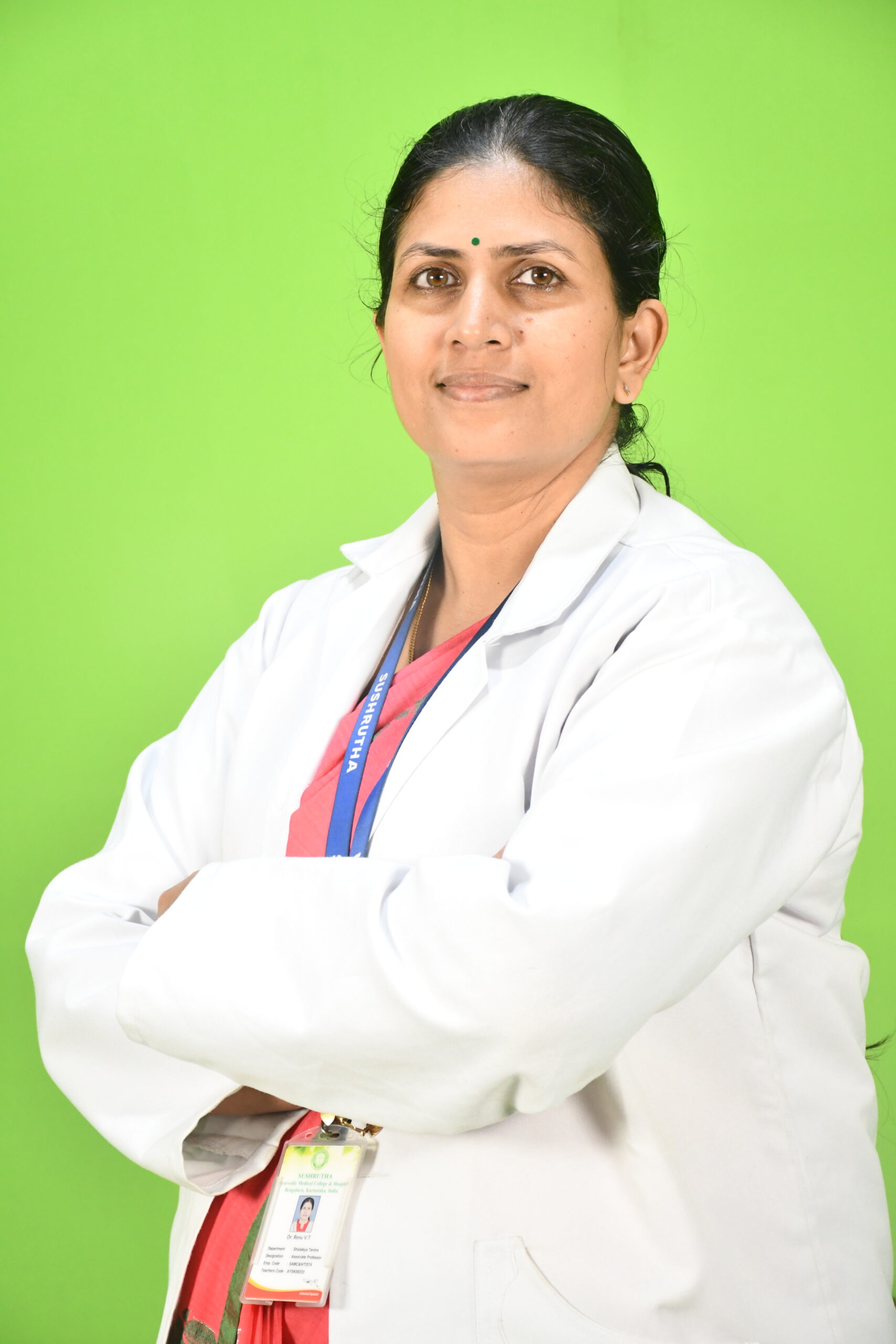
Dr. Renu V T
Designation : Associate Professor
Years of Experience : 8.4yrs
NCISM teachers ID : AYSK00233
RGUHS Teachers ID : A3178
SAMC&H Employee ID : SAMC&H/T/074
Dr. Aswathy.P
Designation : Assistant Professor
Years of Experience :Nil
NCISM teachers ID : Yet to recieve
RGUHS Teachers ID : Nil
SAMC&H Employee ID : SAMC&H/T/099
Department Initiatives:
Awareness Programs: Creating awareness about the importance of sensory organs and Ayurvedic treatments through health camps, talks within the institution, and public outreach programs.
Workshops and Skill Enhancement Programs: Hosting workshops on advanced Ayurvedic diagnostic techniques and the integration of modern healthcare methods, ensuring students stay updated with the latest trends and enhance their practical knowledge.
Interactive Demonstrations and Live Case Sessions: Organizing live demonstrations of Ayurvedic diagnostic and therapeutic methods, allowing students to witness and participate in the real-time treatment of patients.
Collaboration with Modern Medicine Practitioners: Facilitating interactions with ENT specialists, ophthalmologists, and other medical professionals, bridging the gap between traditional Ayurvedic practices and modern healthcare.
Wellness Camps and Community Outreach: Organizing Ayurvedic wellness camps focused on sensory organ health, where students actively contribute to public health education and offer free consultations and treatments.
Digital Learning Resources: Incorporating e-learning platforms, webinars, and virtual clinics, allowing students to engage with global Ayurvedic experts and stay informed about the latest advancements in the field.
Departmental activities:
Comprehensive Teaching Aids: The department is equipped with models, charts, instruments, and specimens to provide a thorough understanding of the structural, functional, diagnostic, and therapeutic aspects of Shalakyatantra.
Guest Lectures and Expert Sessions: Regular guest lectures from professionals across various fields, offering students in-depth knowledge of diagnosis and treatment approaches for sensory organ and head-related disorders.
Hands-on Training: Practical classes include training in Ocular therapies and Parasurgical Procedures, ensuring students gain proficiency in Ayurvedic treatments and therapies.
Case Taking and Presentations: Emphasis on case-taking, case presentations, and follow-up care, helping students gain real-world experience in treating specialty cases and refining their clinical skills.
Clinical Exposure and Internships: Opportunities for students to gain hands-on experience in real-life clinical settings, where they can observe and assist in treating sensory organ and head-related disorders under expert guidance.
Research and Case Studies: Encouraging students to engage in research projects, clinical trials, and case studies, fostering a deeper understanding of Ayurvedic treatments and their impact on sensory organ health.
Research and Publications from the Department:
Publications:
Role of Gandusha Pittaja Mukhapaka (Ophthous Ulcer) A Randomized Study in IJAPR Volume 7 issue 2nd February 2019.
Influence of Ocular Therapies Spherical and Cylindrical Power of the Eye: A Case Report ( RJAS Journal)
Research projects:
Research project in progress – A Randamized Active Clinical trial to compare the efficacy of Apamarga Kshara taila Karna pichu and Karnapoorana in the Management of Subjective Tinnitus.
Research project in progess – A comparative clinical study to evaluate the effect of AMALAKI CHURNA–TAKRA SHIROLEPA and HARITAKI CHURNA-TAKRA SHIROLEPA in DARUNAKA wsr to Dandruff (Pityriasis capitis)
SPARK research Project 2023: To Evaluate the effect of Kesharanjana yoga application on scalp in the management of Akala Palitya.
SPARK research Project 2024: A Randomized Controlled Trial to compare the efficacy of Shigru Varti Dhumapana with Fluticasone Furoate Nasal Spray in the Management of Allergic Rhinitis.
Best Practices of the Department:
Endoscopic ENT examinations and hands-on training are provided to students and interns.
Modern ophthalmologists, dentists, audiologists, and ENT specialists make regular visits to the college to deliver guest lectures.
Kaumarabhritya (Pediatrics)
Introduction to Department:
Kaumarabhritya is dedicated to the holistic care of children; in health and in sickness, right from conception till the achievement of adulthood. A nation’s development and prosperity depends on the mental and physical health of its young population. Hence, it becomes very important to train our BAMS students to become proficient in the theoretical and clinical aspect of the subject of Kaumarabhritya by robust clinical training and comprehensive theoretical knowledge.
Mission:
Our mission isto leverage innovative methodologies and advanced training modulesto provide knowledge of the subjectto the students in an interesting way. We strive to make the learning experience engaging and practical, enabling students to confidently manage pediatric patients with expertise and compassion. Additionally, the department prioritizes fostering a culture of pediatric research by undertaking student research projects funded by the institute, state and central agencies each year, encouraging academic excellence and innovation.
Vision:
The Department of Kaumarabhritya envisions establishing itself as a leader in pediatric Ayurveda education and research. By continuously expanding the frontiers of knowledge, we aim to deepen our understanding of childhood illnesses and enhance treatment approaches through Ayurveda. Our ultimate goal is to mentor the next generation of Vaidyas, instilling in them a commitment to societal service while upholding the highest ethical and moral standards of Ayurveda.
Faculty in the Department of Kaumarabhritya:
Dr. Champa Pant
Designation: Professor & Head of the Department Years of Experience: Fifteen years of teaching experience
NCISM teachers ID: AYUKC00983
RGUHS Teachers ID: A 0175
SAMC&H Employee ID: SAMC & H/T/013
Dr. Vanita T HAvinal
Designation: Associate Professor
Years of Experience: 8 Years 4 Months
NCISM teachers ID: AYKB00112
RGUHS Teachers ID:
SAMC&H Employee ID: SAMC&H/T/094
Dr. Namitha rao
Designation:Assistant Professor
Years of Experience: 6 Months
NCISM teachers ID: AYKB01255
RGUHS Teachers ID:
SAMC&H Employee ID: SAMC&H/T/090
Department Activities:
The students are given in-depth knowledge of the subject using conventional methods such as classroom lectures and contemporary methods like digital media, smart boards. Hands-on experience in practical classes and clinical classes is emphasised.
Students are engaged in fun activities centred around the subject to make learning enjoyable.
Research and Publications from the Department:
The Department actively fosters a culture of research and scholarly publications. Students are encouraged to embrace curiosity and engage in critical thinking to explore and address unanswered questions in the field. They are guided to develop well-structured research proposals and apply for funding from various state and central agencies.
These funded projects form an integral part of undergraduate training, laying a solid foundation for cultivating a research-oriented mindset among students. Upon completing their projects, students are further encouraged to refine their scientific writing skills and publish their findings in indexed journals, thereby contributing to the body of knowledge in the field.
To date, the students have successfully completed six funded Kaumarabhritya research projects resulting in five publications with principal investigator students as first authors. Sixth paper is currently under final revision. This commitment to research not only enhances the academic profile of the department but also empowers students with skills essential for their future endeavors in Ayurveda.
Students’ projects funded by RGUHS completed
1. Project Title: Has prevalence of myopia in school going children changed after onset of Corona Pandemic? An exploratory survey Study. Student Name: Miss Samana T V Guide Name: Dr. Champa Pant
2. Project Title: Impact of Daivavayapashraya Chikitsa w s r to Mantra Chanting on Smrithi (Memory) in Healthy Children: A nonpharmacological interventional study. Student Name: Miss Meghala C Guide Name: Dr. Champa Pant
3. Project Title: Prevalence of malnutrition in school-going children with special reference to Sthaulya and Karshya: A cross-sectional survey study Student Name: Miss Divya B Guide Name: Dr. Champa Pant
4. Project Title: Effect of Shodashanga Dhupana (medicated fumigation) on the microbial concentration in the indoor air in Kumaragara (pediatric OPD and IPD): an experimental study. Student Name: Mr Sourabh D S Guide Name: Dr. Champa Pant
...
SPPARK Projects funded by CCRAS
1. Project Title: Effect of Sarala-Niryasa Malahara (Pine-resin ointment), a folklore remedy for Padadari (cracked feet) in adolescents: Double blind, within-individual, randomized, vehicle- controlled, pilot study Student Name: Mr Sourabh D S Guide Name: Dr. Champa Pant
Undergoing students’ projects funded by RGUHS
1. Project Title: Effect of Danta-dhawana on salivary parameters and concentration of Mukha-Krimi (oral microbes) with w s r to Streptococcus mutans-A triple-blind, n-of-1, randomized controlled, experimental study. Student Name: Miss Nehaa Suresh Guide Name-: Dr. Champa Pant
2. Project Title: Effect of Kunapajala, a liquid organic manure on the germination and yield of Vacha (Acorus calamus L.), a drug of importance in Kaumarabhritya (Ayurvedic Pediatrics)-A comparative, experimental study Student Name: Miss Anushka Survase Guide Name: Dr. Champa Pant
Publications
Pant C, Daruharidra: A threatened medicinal plant of Kumaon hills, June 1999,Himaparyavarana-Publication of G B Pant Institute of Himalayan Environment and Development
Pant C, Chronic Fatigue Syndrome or Balavisramsa – A comparative study, Aryavaidyana,Vol-XV, No 1, Aug-Oct. 2001. A publication of Arya Vaidya Shala, Kottakkal
Pant C, Plastic Surgery and Ayurveda, Aryavaidyana, Vol-XVII, No 2, Nov2003-Jan 2004, A Publication of Arya Vaidya Shala, Kottakkal
Pant C, Effect of Shatyadi Kashaya in the management of Amavata, RJAS, A publication of RGUHS, January 2020, Bangalore
Pant C, The Damaging effect of Ama on Srotansi in Amavata, ISSN 0970-4086, VOL XXXIII, No 2,November 2019-January 2020, Aryavaidyan
Pant C, Uncommon herbs and spices used in culinary practices of Uttarakhand and their medicinal properties-An Exploration, Aryavaidyan, Vol XXXV, No 1&, August 21-Jan 22, Pg No 70-80
Pant C, et al., Bijadushti Janya Asthi Dhatu Kshaya with Special Reference to Progressive Pseudo Rheumatoid Arthropathy (Dysplasia) of Childhood – A Case Report Year: 2023, Volume:10, Issue: 1, Page no. 52-58, DOI:10.26463/rjas.10_1_1
Shravani L, Pant C, The effect of Satvavajaya chikitsa w s r to Carnatic Classical Music on cognitive functions and awareness in Adolescents, International Journal of Ayurveda Research , Jul-Sep 2023,4(3):171-176
Samana T V, Pant C, Has prevalence of myopia in school going children changed after onset of Corona Pandemic? An exploratory survey Study. RJAS 2023;10(2):37-41
Meghala C, Pant C, Impact of Daivavayapashraya Chikitsa w s r to Mantra Chanting on Smrithi (Memory) in healthy Children: A nonpharmacological interventional study. Journal of Indian System of Medicine 11(3):p 156-162, July-September 2023. | DOI: 10.4103/jism.jism_37_23
Divya B, Pant C, Reddy S, Prevalence of malnutrition in school-going children with special reference to Sthaulya and Karshya: A cross-sectional survey study .J of Ayurveda and Hol Med (JAHM). 2024;12(5):16-29
Sourabh D S, Pant C, Effect of Dhupana (medicated fumigation) on the microbial concentration in the indoor air in Kumaragara (pediatric OPD and IPD): an experimental study. Journal of Indian System of Medicine 12(2):p 90-98, April-June 2024. | DOI: 10.4103/jism.jism_27_24
Pant C, Gagana S, Management of Ahiputana (∼diaper rash) in a child with surgically corrected Hirschsprung’s disease –Ayurvedic approaches of management Journal of Ayurveda Case Reports 7(4): Accepted for Oct-Dec 2024.
Sourabh D S, Pant C, Effect of Sarala-Niryasa Malahara (Pine-resin ointment), a folklore remedy for Padadari (cracked feet) in adolescents: Double blind, within-individual, randomized, vehicle- controlled, pilot study Under final review in Indian Journal of Ayurveda and Integrative Medicine KLEU.
Best Practices of the Department in Education
Integrated Teaching Approach: The department employs a blend of modern teaching methods and traditional Ayurvedic principles to provide holistic education to students. Case-based learning, group discussions, and hands-on training are integral to the curriculum.
Skill Development Workshops: Regular workshops are conducted to enhance clinical and diagnostic skills, focusing on areas such as pediatric examination techniques, Ayurvedic therapies, and management of common pediatric conditions.
Research-Oriented Learning: Students are encouraged to develop research proposals, apply for grants, and participate in research projects. This fosters a scientific and inquiry-based approach to Ayurveda and pediatric healthcare.
Monthly Case Presentations: Organized presentations of clinical cases by students and faculty to analyse and discuss unique cases, enabling peer learning and critical thinking.
Student Participation in Community Outreach: Students and interns posted in Kaumarabhritya Department actively participate in medical camps, Swarnaprashana events, and health awareness programs to gain practical exposure and understand community health needs.
Practical Training: Hands-on training in preparing Ayurvedic formulations for Lehana, Swarnaprashana, and Balapanchakarma is provided to ensure students are adept at applying theoretical knowledge to real-life situations.
Library Resources for Academic Excellence: The department maintains a library with resources on pediatric Ayurveda and modern medicine to assist students in research, case study preparation, and knowledge enhancement.
Mentorship Programs: Faculty members mentor interns and students to help them build expertise in pediatric Ayurveda, refine their clinical acumen, and develop skills in scientific writing and presentation.
Focus on Behavioural Paediatrics: Special training modules are developed to educate students about managing childhood behavioural disorders such as ADHD, Autism, and OCD using Ayurvedic approaches.
Collaborative Learning: Partnerships with other departments and institutions for knowledge exchange, guest lectures, and collaborative projects provide students with exposure to diverse perspectives.
Interdisciplinary Training: Encouraging students to integrate Ayurvedic principles with modern pediatric advancements, fostering a well-rounded approach to child healthcare.
Continuous Assessment and Feedback: Regular assessments, quizzes, and feedback sessions help students identify their strengths and areas for improvement, ensuring consistent academic growth.
These educational practices equip students with theoretical knowledge, practical skills, and research capabilities, preparing them to become proficient pediatric practitioners and researchers in Ayurveda.
Departmental Annual Report for the Year 2025:
Panchakarma (Detox)
Introduction to Department:
The Department of Panchakarma at Sushrutha Ayurvedic Medical College is a premier center for Panchakarma education, research, and clinical services. Our expert faculty, well-equipped facilities, and rigorous curriculum ensure students receive comprehensive training in bio-purification and rejuvenation therapies. Additionally, our faculty prioritize to train students in research, efficacy and safety of Panchakarma therapies, as well as integrative approaches with modern healthcare sciences, to advance the field and provide holistic healthcare solutions.
Mission:
“To restore balance and vitality through personalized Panchakarma treatment, blending ancient Ayurvedic wisdom with modern healthcare standards. We educate and empower individuals to adopt preventive self-care practices, promoting holistic well-being and disease prevention.”
Vision:
“To establish our Panchakarma department as a premier centre of excellence in advancing the science of bio-purification and rejuvenation, by integrating traditional Panchakarma techniques with contemporary healthcare needs, we aim to:
– Provide expert training and education
– Pioneer innovative detoxification protocols
– Enhance community health through outreach programs
– Foster a culture of preventive wellness
Our goal is to set a benchmark for Panchakarma therapy, harmonizing ancient wisdom with modern healthcare for optimal well-being."
Faculty in the Department of Panchakarma
Dr. Sanghamitra Patnaik
Designation : Professor & HOD
Years of Experience : 24 years
NCISM teachers ID : AYKC00569
RGUHS Teachers ID : A0183
SAMC&H Employee ID : SAMCH/T/003
Dr. Pooja B A
Designation : Professor
Years of Experience : 13 years
NCISM teachers ID : AYPK00491
RGUHS Teachers ID :
SAMC&H Employee ID : SAMCH/T/017
Dr. Ramya R V
Designation: Associate Professor
Years of Experience : 5.5 years
NCISM teachers ID : AYPK00923
RGUHS Teachers ID :
SAMC&H Employee ID : SAMCH/T/055
Dr. Priya
Designation:Assistant Professor
Years of Experience :
NCISM teachers ID : AYPK01856
RGUHS Teachers ID :
SAMC&H Employee ID : SAMCH/T/097
Department Initiatives (Visits):
Upliftment in the innovative teaching methodology.
Student exposure to various platforms like Panchakarma treatment room, seminars, competitions.
Department Activities:
Academic activities to the students like projects, model making, charts, presentations
Conducting various workshops & CME.
Research programs involving students.
Research and Publications from the Department.
As Resource person Yantra 2023 – International conference on Integrative Medicine, Theme: Models of Integration in Health Care on 23-25 November 2023 at NIMHANS Convention Centre, Bengaluru.
Guest Speaker 25th (Incofyra) International conference on Frontiers in Yoga Research and its Application at Pre-conference workshop on CME from 28th Dec 2023 to 2nd Jan 2024.
Chair Person – topic – Traditional approaches to Injury Prevention 25th (Incofyra) International conference on Frontiers in Yoga Research and its Application at Pre-conference workshop on CME from 3rd Jan to 6th Jan 2024.
Resource person – Topic- Vamana Karma & its Applications On 13/03/2024 – 6 days CME for AYUSH teachers on Panchakarma 2024 at SAMCH sponsored by Ministry of AYUSH & coordinated by RAV, New Delhi.
Best Practices of Department.
Collection & processing of various drugs utilised in the panchakarma treatment.
Prasooti Tantra & Stri Roga
Introduction to Department:
The Department of Prasoothi Tantra Evam Stree Roga is providing the best quality Teaching and Training to all students in BAMS Course. Completed theoretical knowledge about the subject matter and its parallel practical application are provided by the college and hospital. Various Research Activities are being carried out by the students providing Ayurvedic care and treatment for gynaecological and obstetric disorders. The main objective of the college is to produce high standard doctors with excellent knowledge and skills in the field of Prasoothi Tantra Evam Stree Roga
Mission:
To provide highly knowledgeable and skilled students, who are well versed in the subject matter and has research orientation to provide evidence based treatment in Ayurvedic Prasoothi Tantra Evam Stree Roga.
To increase the quality of students, in terms of theory and skills to produce excellent new doctors in the field of Prasoothi Tantra Evam Stree Roga.
Vision:
To see all the students, using for themselves and propagating regimen and treatment starting from menarche to menopause as per our classics of Ayurvedic Prasoothi Tantra Evam Stree Roga.
Students learning and understanding the importance and practice of Ayurvedic Prasoothi Tantra Evam Stree Roga, in compare to contemporary medicines.
Faculty in the Department of Prasooti Tantra Evam Stree Roga:
Dr. Ranjitha B M
Designation : Professor and HOD
Years of Experience : 10 YearsÂ
NCISM teachers ID : AYPS00385
RGUHS Teachers ID :----
SAMC&H Employee ID : SAMC&H/T/047
Dr. Netravati B Aruni
Designation : Associate Professor
Years of Experience : 5 Years
NCISM teachers ID : AYPS01052
RGUHS Teachers ID : -------
SAMC&H Employee ID : SAMC&H/T/081
Dr. Shruthi R
Designation : Assistant Professor
Years of Experience : 6 Months
NCISM teachers ID : AYPS01840
RGUHS Teachers ID : -------
SAMC&H Employee ID : SAMC&H/T/091
Department Initiatives (Visits):
⮚ Teaching the subject matter of Prasoothi Tantra Evam Stree Roga theory and practical’s to students using various methods, such as PPT, videos, live demonstrations, clinical teaching, practical visualisation etc.
⮚ Labour posting for undergraduate students at other allopathic hospitals for practical training and exposure, such as VaniVilas Hospital, Bangalore Medical College & RI Hospital.
⮚ Research orientation, encouraging, guiding and publication of UG research papers by students in SPARK and other place in Prasoothi Tantra Evam Stree Roga.
Department Activities and Best Practices of Department.
⮚ Conduction of shloka patana on daily basis in the classroom for all students.
⮚ Practical exposure in Prasoothi Tantra Evam Stree Roga to all the students in OPD, IPD, Labour ward and OT of SAMC & H.
⮚ Practical training in all stanika chikitsa of Stree Roga by demonstrating uttara basti, yoni prakshalana, yoni pichu, yoni purana etc.
⮚ Medical camps exposure to students, in order to bring awareness about Ayurveda treatment in the field of Prasoothi Tantra Evem Stree Roga in schools, colleges, PHC’s and rural areas.